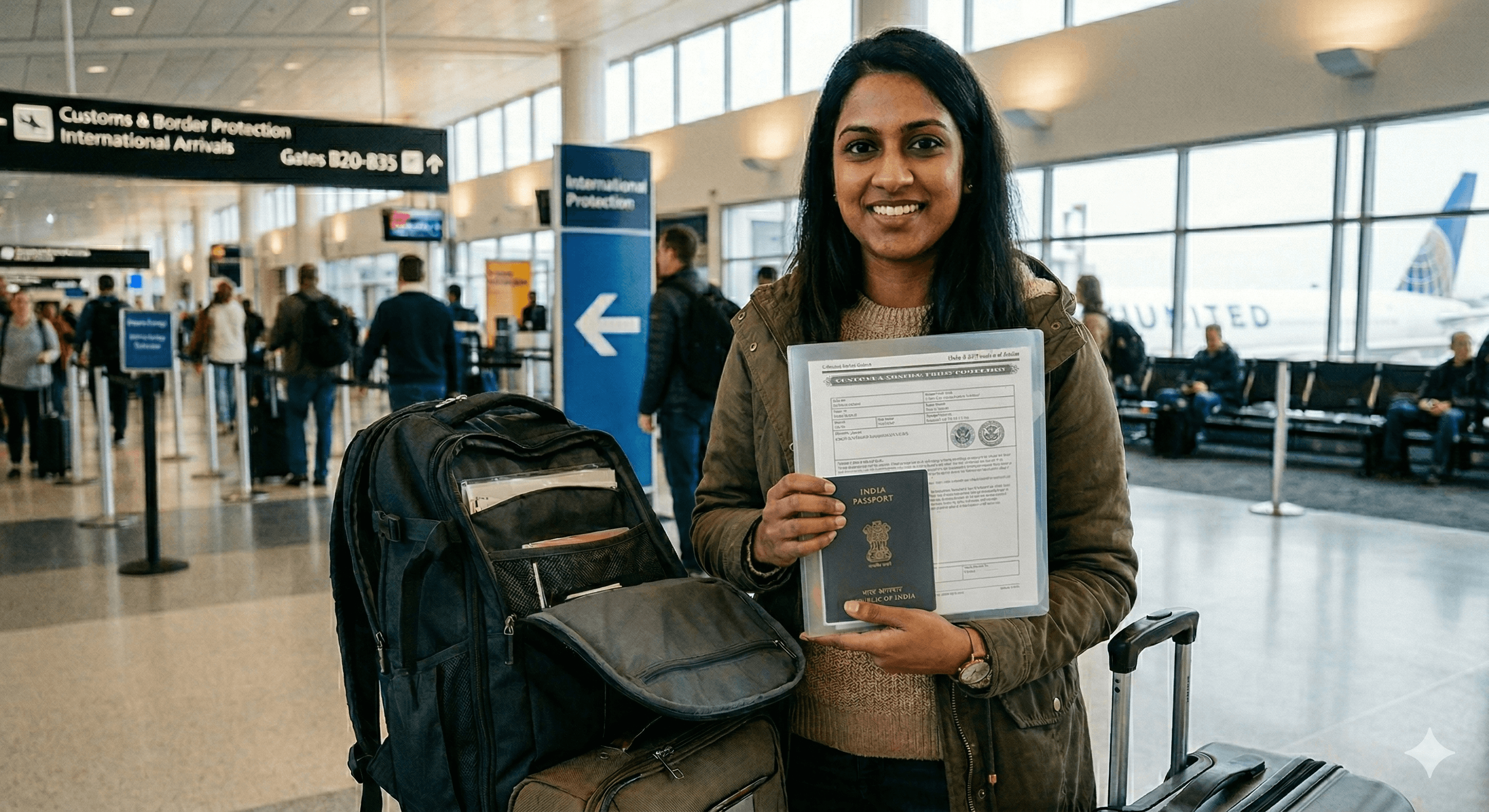
Welcome to the hand-carry rule.
When you land, immigration officers may ask for proof of your status immediately, long before you ever see your checked luggage. If your documents are packed away or delayed, you could face secondary inspection, long waits, or unnecessary stress at the port of entry.
Let’s clear up a common misconception right away: photos or PDFs on your phone are NOT valid legal substitutes for original documents at the border. Digital copies are incredibly helpful backups, but Customs and Border Protection (CBP) officers typically expect to see the originals.
Think of this as your non-negotiable checklist. These items belong at the very top of your personal bag.
The Must-Carry Checklist
Keep these in your backpack, never your suitcase:
Passport: Must include your valid visa.
Original Visa Documentation: Or your official approval notice.
Status Forms: Your I-20, DS-2019, or I-797 (depending on your specific visa status).
Proof of Purpose: An offer letter, proof of enrollment, or employment verification.
Supporting Evidence: Any other immigration documents relevant to your specific trip.
Having these ready signals that you are prepared and makes your entry process significantly smoother.
Why Digital Copies Alone Aren’t Enough
It’s smart to keep digital copies on your phone or in cloud storage, but treat them as an insurance policy, not a replacement. At the border, officers may need to review original signatures, watermarks, stamps, or official paper notices to verify your legal status.
If your only proof is a screenshot, you might be asked to wait while officers manually verify your case, leading to exhausting delays. Bottom line: bring originals, keep digital copies as backups.
How to Organize a “Red Folder” for Travel Day
Many immigration attorneys recommend creating a dedicated travel folder (often dubbed the “Red Folder”) so everything is instantly accessible if CBP asks.
Here’s a simple way to set it up:
Front Section: Passport and boarding documents
Middle Section: I-20 / I-797 / status paperwork
Back Section: Offer letter, enrollment proof, financial documents
Separate Sleeve: Printed copies and personal notes
Pro Tip: Use a brightly colored folder or clearly labeled organizer so you can grab it quickly without digging through your bag. After a 14-hour flight, you’ll appreciate the simplicity!
Why the Hand-Carry Rule Matters
Airlines misplace bags more often than people expect, but immigration inspection happens the moment you land. Following the hand-carry rule keeps you in complete control during one of the most critical steps of your journey: proving your right to enter the country.
It’s a small habit that prevents massive headaches.
Your Quick Pre-Flight Check
Before leaving for the airport, ask yourself:
Are my original immigration documents in my backpack?
Do I have my passport and visa easily accessible?
Is my “Red Folder” organized for a quick review?
Do I have digital backups securely saved just in case?
If you answered yes to all four, you’re ready to fly.
Even if your suitcase goes on an unexpected adventure, your paperwork shouldn’t. Ensure your digital backups are as organized as your physical folder—sign up for Immplify today so you’re never caught off guard again!
Immplify provides general information to help you navigate U.S. immigration and settlement. This is not legal, tax, or financial advice. For decisions specific to your situation, please consult a licensed attorney or qualified professional.