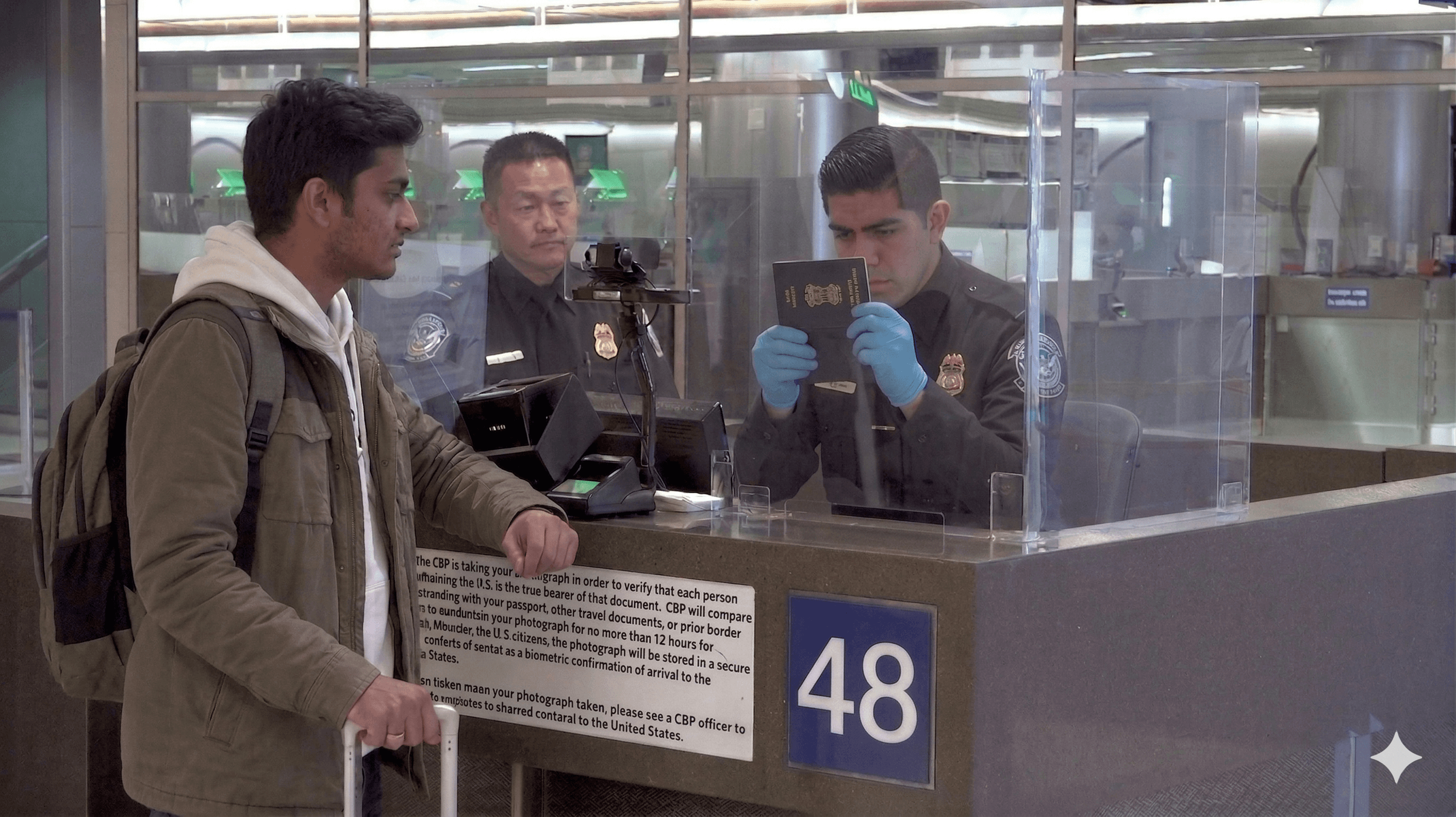
You’ve just landed in the U.S., exhausted from a long flight, when an officer looks up from their screen and asks, “Why are you here?” It sounds like a simple conversational icebreaker, but your answer carries serious legal weight. This short exchange at passport control is your CBP interview. CBP (U.S. Customs and Border Protection) is the federal agency responsible for inspecting travelers and determining admissibility. Even if the conversation lasts only two minutes, it is a formal legal inspection verifying that your true purpose for entering matches the visa stamped in your passport.
Here is how to navigate the interview smoothly, confidently, and accurately.
The Core Question: “Why Are You Here?”
Almost every traveler hears some version of this question. Legally, the officer is trying to determine your intent. In immigration law, there is a critical distinction you must understand:
Concept | What It Means |
Status | What your visa legally allows you to do. |
Intent | What you actually plan to do while in the U.S. |
Your answer must perfectly align those two things. If your stated intent suggests plans outside your authorized status—even if you are just making casual conversation—it can raise immediate red flags. For example, if you are entering on a tourist visa and mention "looking for work," or if you are entering on a student visa and discuss "settling down permanently," you create a mismatch between intent and status.
The Safest Formula for Answering
Answer only what is asked. Do not overshare.
Keep responses concise. Short, factual sentences are best.
Align your explanation with your visa category. * Avoid volunteering future immigration strategies. Deal only with the present entry.
Track 1: The F-1 Student Visa & The “Intent Trap”
If you are entering on an F-1 visa, your primary, legally authorized purpose is academic study. Your answer to “Why are you here?” should reflect that clearly and simply: “I am here to study full-time at [University Name].”
The complication usually arises during follow-up questions. Officers may ask:
“Do you plan to work?”
“Are you staying after graduation?”
“What are your long-term plans?”
The F-1 is a non-immigrant visa, meaning your present intent must be temporary and education-focused. Students sometimes fall into the informally named “intent trap” by eagerly over-sharing future ambitions that imply a desire for permanent residence.
How to answer safely: Stay strictly within the boundaries of your current status.
“I will only work if authorized under F-1 regulations, like on-campus employment or OPT.”
“My primary focus right now is completing my degree.”
You are not being deceptive by staying focused on the present; you are being precise. Immigration officers are assessing your compliance with the visa category you hold at the moment of entry, not ten years from now.
Track 2: The H-1B Worker & Employer Verification
For H-1B travelers, the border officer's focus shifts from academic intent to employment verification. The H-1B visa is employer-specific, meaning your authorization is tied directly to the company that filed your petition.
At inspection, officers will likely ask:
“Who is your employer?”
“What is your job title?”
“Where will you be working?”
They are verifying that the job is real, active, and consistent with your approved petition.
Your best defense: Carry a recent Employment Verification Letter. Ideally, this should be dated within 14 days of your travel. This letter must explicitly confirm your job title, your salary, that you are currently employed, and that you are returning to resume your position.
Immigration approvals can be months or years old, but CBP wants confirmation that the employment relationship is active today. If you claim to work for a company but cannot provide evidence upon request, it can easily lead to a stressful secondary inspection.
Universal Rules for Any Visa Category
No matter what visa is in your passport, these principles apply across the board:
Stay Aligned: Keep all answers strictly aligned with your authorized status.
Be Direct: Avoid unnecessary elaboration, jokes, or sarcasm.
Stay Organized: Have your physical documents (I-20s, offer letters, passports) accessible and ready to hand over.
Keep Calm: CBP officers have broad discretion to admit you, refer you to secondary inspection, or even deny entry. A calm, respectful demeanor goes a long way.
The Bottom Line
Clear purpose. Aligned status. Proper documentation.
When those three elements match, the border process is usually straightforward and fast. Preparation is not paranoia; it is a smart travel strategy. That's where Immplify comes in. We help carry the load by keeping you organized, tracking your required documents, and ensuring you understand exactly what your visa allows—making the journey simpler, smarter, and infinitely less stressful.
Immplify provides general information to help you navigate U.S. immigration and settlement. This is not legal, tax, or financial advice. For decisions specific to your situation, please consult a licensed attorney or qualified professional.