Driving in the U.S. sounds simple, but operating the car isn't the hardest part—it’s the paperwork.
You might already have a license from your home country. You might even be a great driver. But once you arrive, that license comes with an invisible expiration date, and navigating the DMV can feel like a test you didn’t study for.
On top of that, there’s REAL ID, which makes your driver’s license about more than just driving—it’s about flying, identity, and access. This guide breaks down what actually matters, what the deadlines mean, and how to get through the process without wasting time.
Your Home Country License Has a Time Limit
Most states allow you to drive with a foreign license for a short period after arriving in the U.S., but this is strictly temporary. After that window closes, you are expected to get a U.S. driver’s license.
Here’s the problem: there’s no universal rule. Each state sets its own timeline, and enforcement varies wildly. That’s why people often assume they’re fine... until they’re not.
The safest move: Treat your foreign license as a short-term solution, not a long-term plan.
What Is REAL ID (And Why Does It Matter)?
REAL ID is a federally compliant form of identification issued by U.S. states. As of May 2025, it became required for basic domestic travel, including boarding flights within the U.S. and entering certain federal buildings. This means your regular driver’s license may not be enough anymore.
A REAL ID looks almost identical to a standard license, but it features a small star in the corner. That star is the difference between catching your flight and being turned away at airport security.
Do You Automatically Get a REAL ID?
No. This is where many people get caught off guard. When applying for a driver’s license, you usually have two options: a Standard license or a REAL ID-compliant license.
If you don’t specifically request a REAL ID and bring the right documents, you won’t get one. Let us help you avoid learning this the hard way.
The DMV Process: What You Actually Need
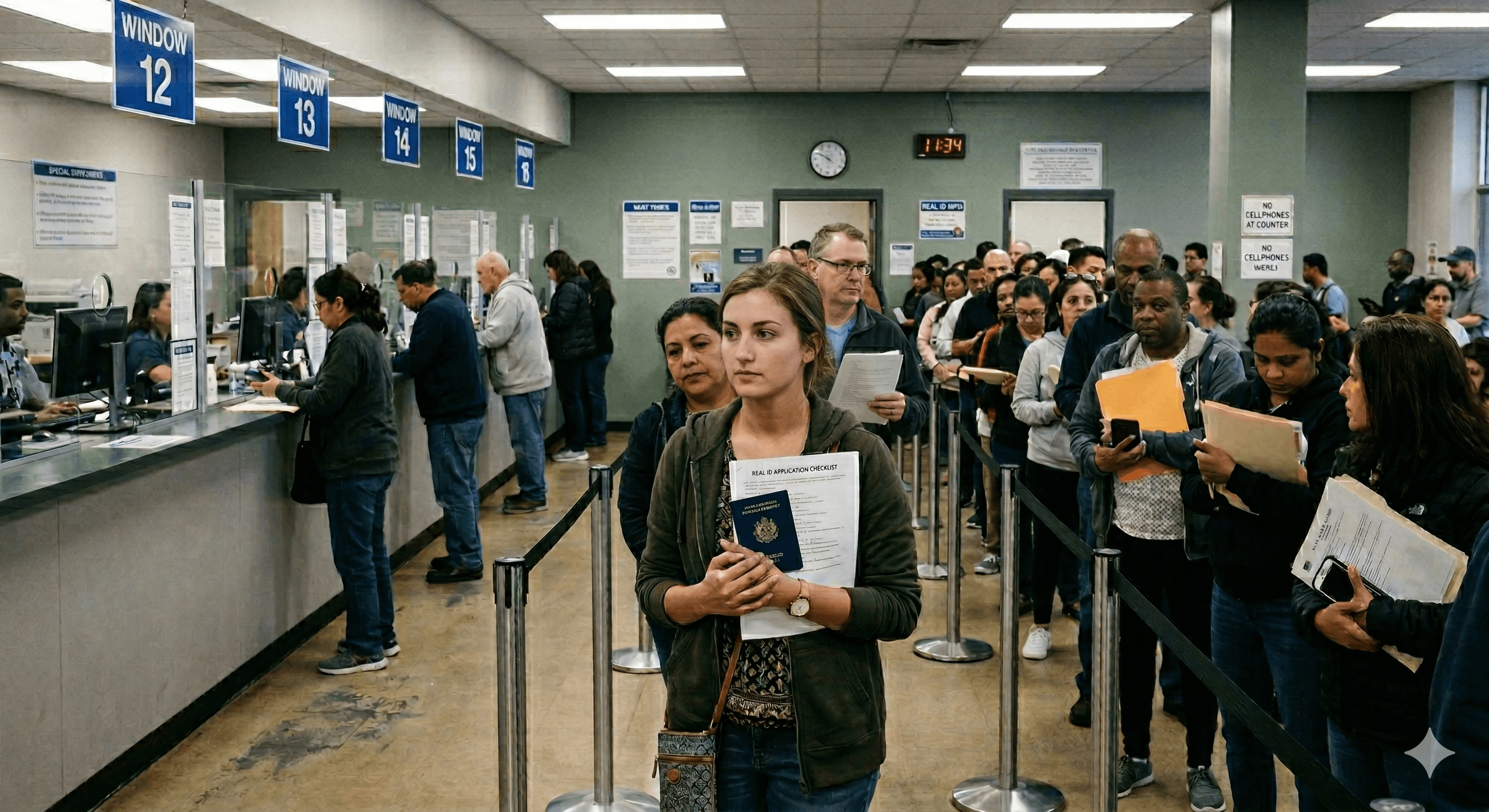
The DMV isn’t difficult because of the driving test; it’s difficult because of the paperwork. To get a license (and especially a REAL ID), you need to prove three things:
Who you are
That you are legally in the U.S.
That you live in the state where you are applying
This usually means bringing a combination of documents, such as:
Passport and visa
I-94 or other immigration documents
Proof of residency (e.g., lease, utility bill, bank statement)
Social Security Number (or proof of ineligibility)
The tricky part isn’t having these documents—it’s having the exact combination your specific state accepts.
Why People Get Stuck at the DMV
Most DMV horror stories come down to one thing: incomplete documentation. You wait in line, get called up, and are told you’re missing a single piece of paper. Now you have to come back and do it all over again.
Common issues include:
Documents that don’t match exactly (e.g., slight name or address variations)
Insufficient proof of residency
Expired or unaccepted immigration paperwork
At the DMV, precision is everything.
A Simple Strategy to Get Through It
Before going to the DMV, take these steps:
Check your state’s official DMV website for specific REAL ID requirements.
Ensure your documents match exactly (same name spelling, same address format).
Bring more proof than you think you need as a backup.
Book an appointment instead of walking in, if your state allows it.
Think of it like submitting a formal application, not just showing up.
The Bigger Picture
Driving in the U.S. is more than just mobility; it’s independence. Without a license, simple things become frustrating hurdles—whether it's commuting to work, running errands, or moving between cities. And without a REAL ID, even domestic flying becomes a headache.
Let Immplify make this process easier by tracking the exact documents required to get your REAL ID license, saving you time, energy, and stress.
Immplify provides general information to help you navigate U.S. immigration and settlement. This is not legal, tax, or financial advice. For decisions specific to your situation, please consult a licensed attorney or qualified professional.